County of Fortune Mayors, Noble Houses & Cultures — The Second Layer Explained
Building is only the first half of County of Fortune. Once the settlements exist, a second game starts: named mayors run them, rival noble houses weave politics across the region, and migrating cultures bring customs that help some villages and complicate others. The developers describe three layers of characters, each with its own identity, and they shape every playthrough. Here is what is officially documented about all three.
Three Layers, One Region
The store's own framing is that a county is more than its ledgers. Three layers of characters shape every playthrough: the mayors who run settlements, the noble houses they belong to, and the cultures the settlers arrive from.
The design intent behind that layering is worth spelling out. Each mayor has a name, each house has a banner, each culture has a homeland — and the developers state that the choices you make about them matter as much as the roads you pave. This is the part of the game that turns a layout puzzle into a story about people, and it is also the part that changes most between playthroughs.
Mayors: Named, Skilled and Flawed
Every settlement is run by a named mayor with their own traits, skills and flaws. That combination is what makes two settlements of the same size behave differently: the mayor is the local variable, and their flaws are as much a part of the design as their skills.
Because mayors are individuals rather than a generic administrator slot, your relationship with them is a resource to manage. The store frames the whole second layer around the choices you make about these people, which suggests that who runs a settlement is a decision with consequences rather than an appointment to click past.
What is not published is a roster. No official list of mayors, no trait tables, no numbers — and the announcement says mayors are being rebalanced for the returning demo, which means even a June build's mayors are not the final word. We deliberately do not invent names or stat lines here.
Noble Houses: Politics With Economic Teeth
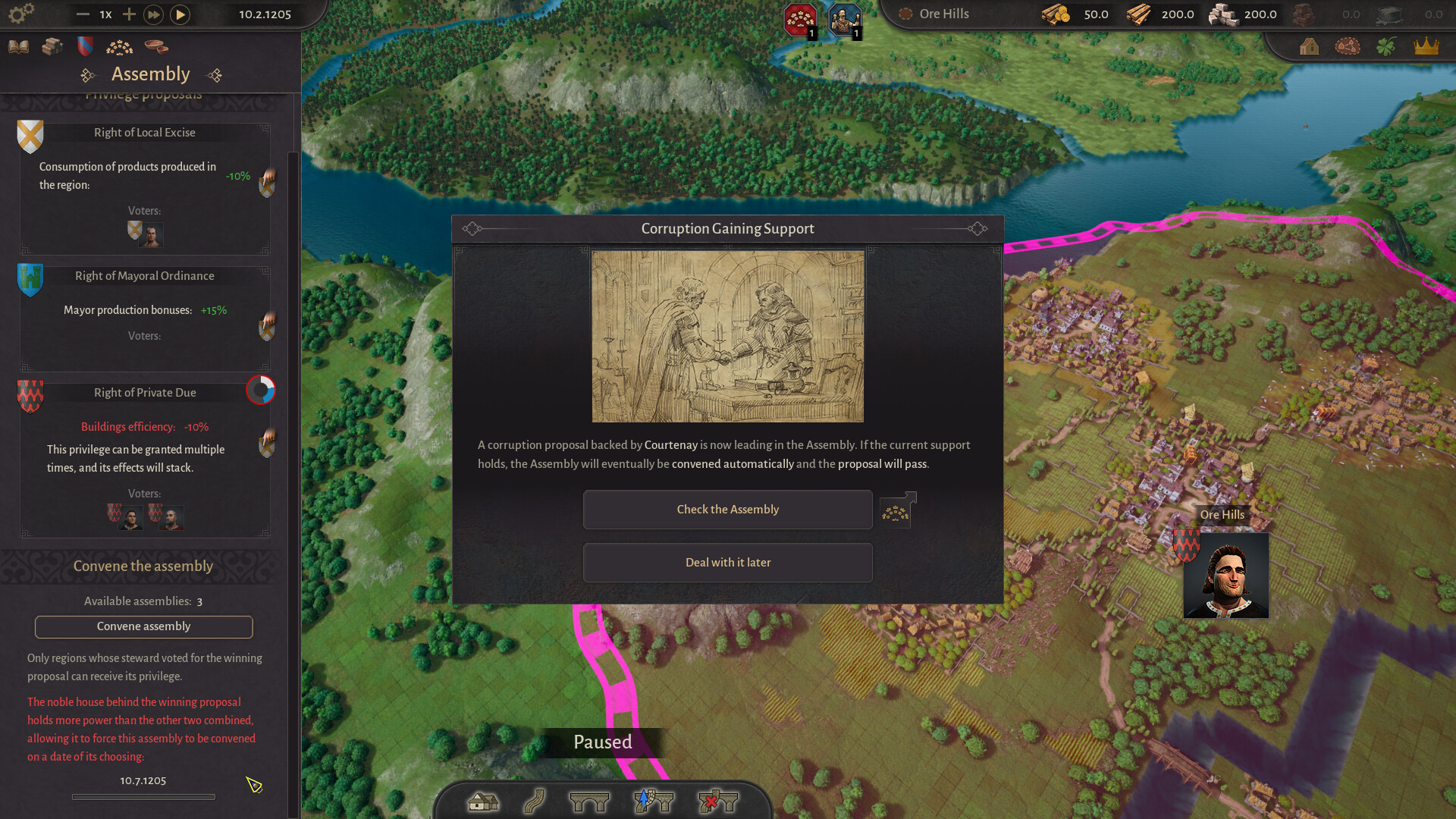
Every mayor belongs to a house, and rival houses weave politics across the region. That single sentence connects the character layer to the economy: this is not flavour text bolted onto a builder, it is a set of factions with interests that intersect with yours.
The store states that rival noble houses exert political and economic pressure on your decisions, and that each house has its own banner. So the county you are building is also a map of loyalties. When you develop one settlement heavily, or route trade one way rather than another, you are not only moving goods — you are changing the standing of houses whose interests are not identical.
The question the developers pose at the end of that section is the honest summary of the design: will you raise one prosperous heartland, or a patchwork of proud rival houses? Both are legitimate counties, and the choice is a strategy choice rather than a moral one.
Cultures: Bonuses, Tensions and Identity
Settlers arrive from different lands. The official description is that migrating cultures bless some villages while complicating others, bringing customs that grant bonuses, tensions and their own identity. Each culture has a homeland.
Cultures are the layer with the strongest confirmation of ongoing work, because the announcement lists a reworked culture system as one of the community-requested changes in the returning demo. That is a positive signal — it means the developers consider this layer central enough to rebuild in response to feedback — and it is also a warning that anything you read about cultures from the June build may already be out of date.
Practically, cultures look like a placement and timing problem layered on top of the geography. Since settlers arrive from specific homelands and bring customs with them, where a culture lands in your county is likely to interact with what that settlement already produces and with the house that runs it. We can state the design; we cannot state the modifiers, because they are not published.
How the Three Layers Interact
The layers are stacked, not parallel. A settlement has a mayor; the mayor belongs to a house; the settlers in that settlement come from a culture. Change one and you have changed the situation of the others, which is why the developers describe the combination as the thing that makes each playthrough different.
It also explains why the game is described as keeping the builder at the heart of play rather than turning into a political simulator. Every challenge is stated to come from the land, the economy and the people you govern, and the people layer exists to complicate the building decisions you were already making. Rival houses applying political and economic pressure is the mechanism; your county is still the subject.
What Is Not Published
There is no official roster of mayors, houses or cultures, no trait tables, no numbers for the bonuses and tensions cultures bring, and no documentation of what happens when a house falls out of favour or a mayor is replaced. The culture system and the mayors are both flagged as reworked or rebalanced for the returning demo, so the safest statement about any specific name or number is that it is subject to change.
That is not a gap in this guide for lack of effort — it is the current state of the official material, and we would rather leave it empty than fill it with invented diplomacy rules.
Governance Checklist
- Check who runs a settlement before you invest in it — mayors are individuals with their own traits, skills and flaws.
- Read the house: every mayor belongs to one, and rival houses apply political and economic pressure across the region.
- Expect cultures to arrive from different homelands with customs that grant bonuses and create tensions.
- Weigh people decisions like infrastructure decisions, because the developers say they matter as much as the roads you pave.
- Decide what kind of county you are building — one prosperous heartland or a patchwork of proud rival houses.
- Expect changes: the culture system is being reworked and mayors rebalanced for the returning demo.
FAQ
Who are the mayors in County of Fortune?
Named individuals who each run a settlement, with their own traits, skills and flaws. No official roster has been published, so there is no verified list of mayor names yet.
What are noble houses?
Every mayor belongs to a house, and rival houses weave politics across the region. The store states that they exert political and economic pressure on your decisions, and that each house has its own banner.
What do cultures do?
Settlers arrive from different lands and bring customs that grant bonuses, tensions and their own identity — migrating cultures are described as blessing some villages while complicating others. The system is being reworked for the returning demo, so the specifics are not final.
Can I replace a mayor?
Not documented. The official material describes mayors as running settlements and being part of houses, but does not publish a replacement mechanic, so we do not claim one exists.
How many houses and cultures are in the game?
Not announced. The store confirms that each mayor has a name, each house a banner and each culture a homeland, but no counts have been published.