County of Fortune Trade & Economy Guide — Production Chains, Rivers and Specialization
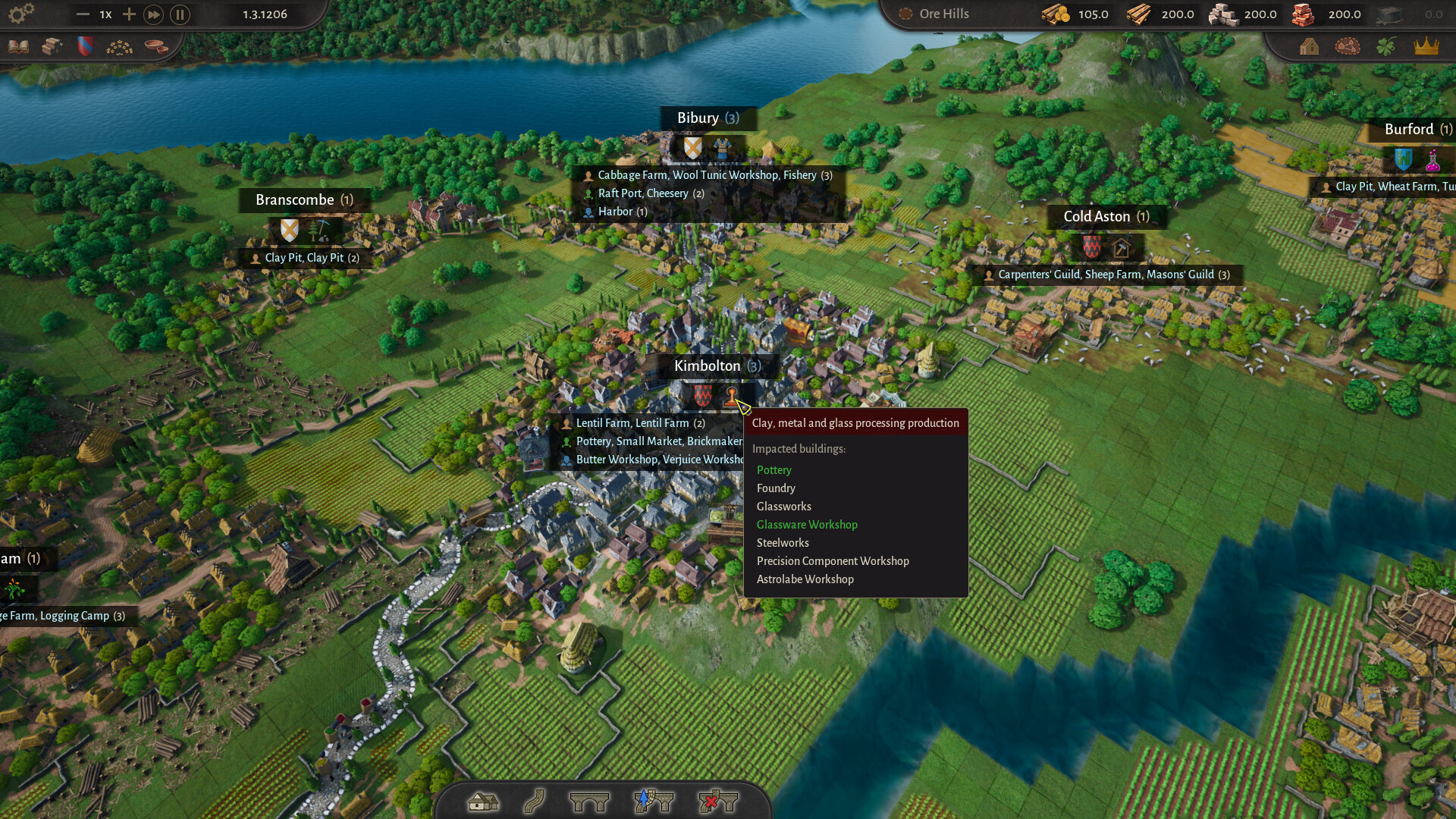
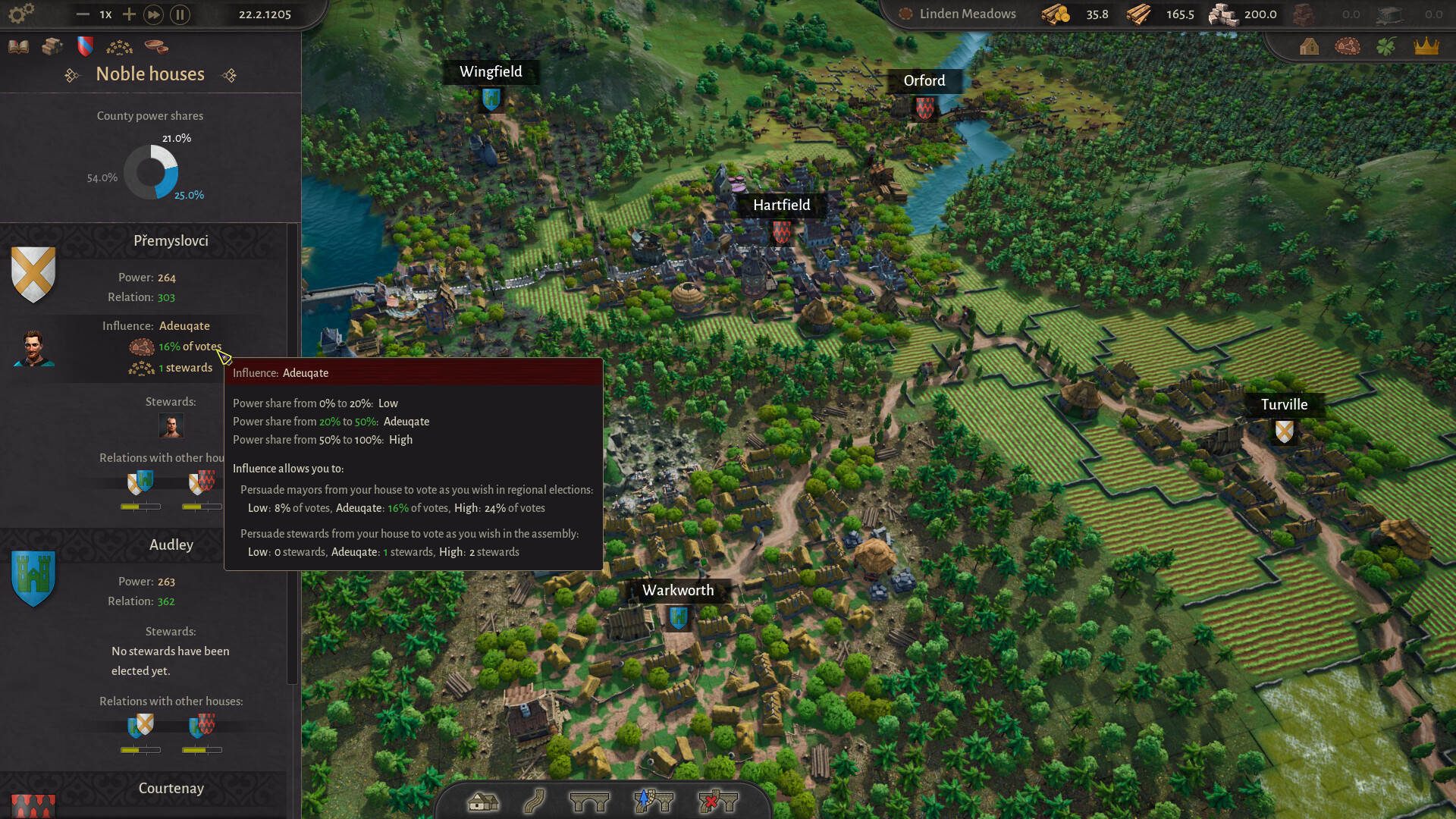
The economy in County of Fortune is designed to be tuned at region scale rather than watched at market-square scale. Raw materials become advanced goods through layered production chains, settlements specialise according to the land around them, and the transport in between — wagons, carts and river vessels — runs on its own. This page explains the system as the developers describe it, and how to think about it before you play.
The Shape of the Economy
The store sums it up in one line: the economy is wide, layered and deliberate. Raw materials are refined into advanced goods across real production chains, which means the interesting goods in your county are several steps away from the ground they came out of.
It also states what the economy is not. You do not micromanage a single market square — you tune a regional economy and watch it breathe. That is a direct instruction about where your attention belongs: not on individual trades, but on the shape of the network, the specialisations you encourage and the bottlenecks you remove.
Specialize by Land, Not by Habit
Settlements specialise based on what the surrounding land offers. Because resource deposits, biomes and terrain profiles decide what each plot is good for, and because climate, soil and elevation shape which crops, industries and products thrive, the map is effectively telling you what each settlement should become.
The consequence for planning is straightforward. A county of identical villages is a county wasting its terrain. If two settlements sit in different ground, they should not be doing the same job; one should feed the other. Specialisation is also how the production chains get their inputs, since advanced goods need materials that are rarely produced in the same place.
Automatic Transport: Wagons, Carts and River Vessels
Transport is handled for you. The official description states that wagons, carts and river vessels carry goods across the county on their own. You are not issuing per-trip orders or babysitting caravans; the movement layer runs on the network you designed.
That makes network design the real economic decision. If goods move automatically, then what you control is where things are produced, where they are consumed, and whether a viable path exists between the two. Navigable rivers turn geography into logistics, and the developers are explicit that placing wisely is what makes trade flow.
Rivers, Passes and Roads: Why Routes Bend
Trade routes between settlements follow real terrain — rivers, passes and roads rather than straight lines. This is one of the clearest mechanical statements on the store page, and it has an immediate practical meaning: distance on the map is not the same as distance in the economy. A settlement across a ridge is not necessarily a good partner.
The official example makes the trade-off tangible. Plant a salt-works next to a pass and wealth follows. Plant a city far from water and the county feels it. When you are choosing specialisations, you are also choosing which corridor your goods will use, and the corridor is determined by the landscape rather than by your drawing tool.
Growth Comes From Supply
The link between trade and settlement development is stated directly: better-supplied settlements evolve, attracting advanced workers and unlocking new goods and buildings. Trade is therefore not a side activity you get to after the building is done — it is the engine that moves a settlement up the tiers.
Read together with the production chain description, this gives a workable order of operations. Get a settlement producing what its land supports. Make sure the goods it needs can actually reach it. Then let the evolution follow, and watch which new goods and buildings become available. If a settlement stalls, the likely question is not about the settlement itself but about what is arriving there.
Trade Planning Checklist
- Let the land choose the specialisation: deposits, biome, terrain, climate, soil and elevation all feed into what a settlement should produce.
- Build production chains rather than single industries — raw materials feed advanced goods.
- Use navigable rivers as your logistics backbone and check that passes and roads can carry the flow.
- Remember that routes follow terrain, so test adjacency on the map rather than on the shortest line.
- Track supply, not just output: better-supplied settlements are the ones that evolve and unlock new goods and buildings.
- Tune the region, not the market square — the design goal is a regional economy that runs itself.
FAQ
How does trade work in County of Fortune?
Raw materials are refined into advanced goods across layered production chains, settlements specialise based on the surrounding land, and wagons, carts and river vessels move goods across the county automatically.
Do I set trade routes manually?
The transport itself is automatic — wagons, carts and river vessels carry goods on their own. What you influence is where production sits and whether the terrain offers a viable path, since trade routes follow rivers, passes and roads rather than straight lines.
What are production chains in the game?
A layered sequence in which raw materials are refined into advanced goods. The store describes the economy as wide, layered and deliberate, with settlements specialising according to what their land offers.
Why is my settlement not growing?
The official rule is that better-supplied settlements evolve, attracting advanced workers and unlocking new goods and buildings. If a settlement is stuck, look at what is reaching it rather than only at the settlement.
Is there a global market or a trade price system?
Not published. The official material describes production chains, specialisation and automatic transport, but does not document an external market or a price mechanic, so we do not state one here.